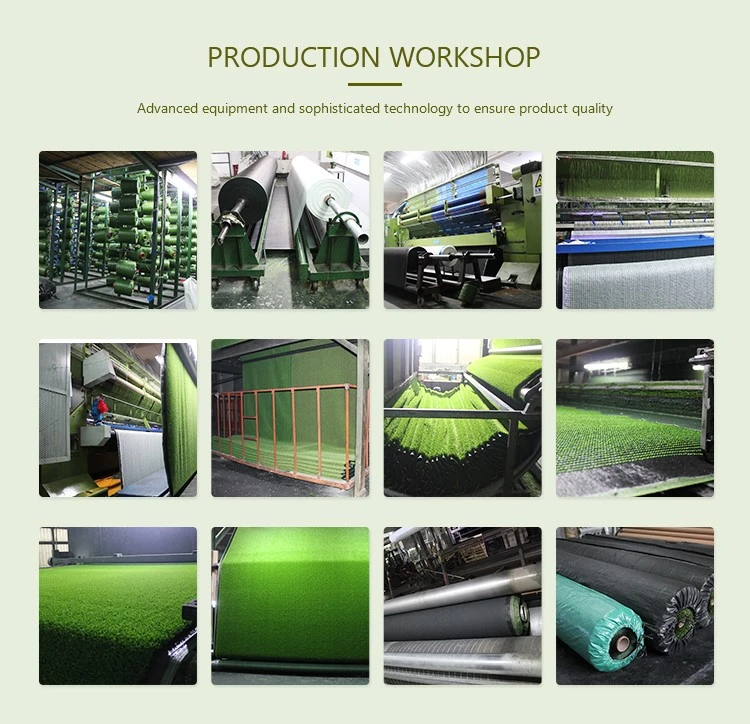
Artificial turf, as an alternative to natural lawn environmental protection products, is widely used in sports fields, courtyards and public green Spaces. Its production process is more complex, involving a variety of processes and materials, mainly including the following steps:
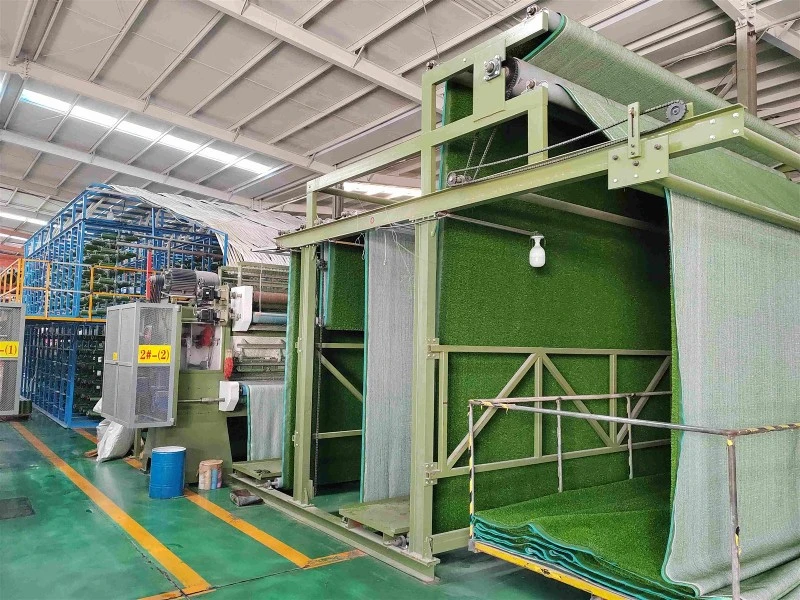
Step 1: Prepare raw materials
The main raw materials for making artificial turf are synthetic fibers such as polyethylene, polypropylene or nylon. These fibers are treated by a special process to ensure that they have good anti-aging, anti-wear and anti-ultraviolet properties. First, these raw materials are mixed, extruded and made into fiber threads.
Step 2: Twist the straw
The prepared raw material is heated and melted through an extruder, and then extruded through a spinneret to form a slender fiber line. These fiber lines are stretched and heat-set after cooling and curing to increase their strength and flexibility. The diameter and shape of the fiber thread can be adjusted according to different needs.
Step 3: Grass silk tufting
In the fiber weaving stage, the treated fiber lines are woven into lawn base cloth. Generally using knitting or weaving process, the fiber line is evenly distributed on the base cloth to form a dense arrangement of grass silk. In the weaving process, the spacing and density of the fiber lines need to be strictly controlled to ensure the quality and service life of the lawn.
Step 4: Glue coating
In order to enhance the bond strength between the grass silk and the base cloth, it is necessary to coat the back of the woven lawn base cloth with a special glue. This glue is usually made of polyurethane or other polymer materials, with good bonding properties and weather resistance. The coating process needs to be uniform to avoid missing or excessive coating.
Step 5: Backing processing
After applying the glue, the backing treatment is also required. The backing layer is usually made of polypropylene cloth or other synthetic material and is used to enhance the overall strength and stability of the lawn. The backing material is pressed together with the rubber-coated lawn base cloth, and cured by hot pressing or other processes to make it firmly combined.
Step 6: Trim and finish
After completing the backing treatment, the lawn needs to be mowed and finished. Professional pruning equipment is used to trim the grass silk to a uniform height, and the surface of the lawn is levelled to ensure its appearance is beautiful and smooth.
Step 7: Inspection and packaging
The completed artificial turf needs to go through strict quality inspection, including appearance inspection, size measurement, physical performance testing, etc., to ensure that the product meets the relevant standards. After passing the inspection, the artificial turf will be rolled into a roll, and packaged and marked, ready for factory sales.