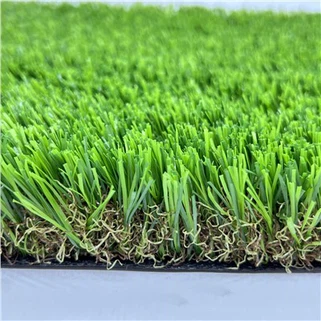
What is Artificial Grass for Patio
Artificial grass for patio is material that is made of synthetic, man made fibers that look like real grass. The synthetic grass blades are green and come in different pile heights. It is constructed in the same way that carpet is made; it has a solid backing and then the blades are machine stitched on.
Advantages of Artificial Grass for Patio
No maintenance required
The fact that it requires no maintenance is often exaggerated. No matter how many times it's said, minimal maintenance is one of the main advantages of artificial grass for your patio. Time usually devoted to lawn care can now be used for family activities or relaxation.
Eliminate puddles
Before installing artificial patio grass, roll and level the ground to eliminate grooves and valleys where water can collect. Small irrigation channels were also added to help drain excess water and prevent it from accumulating in low-lying areas.
No grass stains
Children can play on artificial patio grass without leaving unsightly grass or mud stains on their clothes or shoes. Sliding on natural grass often produces long green or brown streaks that are extremely difficult to get rid of. This doesn't happen with artificial turf.
No exposed spots or ruts
On natural grass, heavy foot traffic can cause paths, ruts or bare spots in lawns and gardens. Artificial grass for your patio is extremely resilient and can withstand the constant pressure of walking. As long as the infill is in place, the blades of the turf will spring back and stay upright.
Shadows are not a problem
Natural grass fades and dies in the shade, while artificial patio grass does not require direct sunlight. Artificial turf works well in the shade because it maintains its color and size with or without sunlight and water.
Safety
One of the benefits of artificial grass for your patio is that it helps prevent the spread of germs and bacteria. Children and pets can play on artificial turf without having to worry about being exposed to harmful pesticides, fertilizers or other toxic chemicals used in maintaining natural turf.


Why Choose us
Rich Experience
Depend On Rich Technical Strength, Advanced Facilities, Modern Management, Our Products Passed The Certification Of ISO9001, ISO14001, ISO45001, SGS,CE.
One-stop Solution
We're committed to quality and concrete actions. That means we always deliver solutions in a professional and practical way.
Quality assurance
As our development target through the development of new products, the extension of the industrial chain, the enhancement of quality awareness, we will continuous enhancement our company rsquo;scomprehensive competitiveness.
24H Online Service
You can contact us about pre-sale, in-sale and after-sale services, we will give you a very satisfactory answer, and we serve you online 24 hours a day.
Garden Artificial Grass Maintenance Tips
CLEAR CLUTTER
Over time, leaves, twigs, and other organic debris can accumulate moisture, rot, and damage your lawn. Use a leaf blower, broom, or plastic rake to prevent debris from settling on artificial patio grass, or remove debris by hand. Small amounts of lightweight debris such as leaves or fallen flowers can usually be removed with a hose. Remove debris as soon as you find it to reduce the risk of lawn damage.
CLEAN PET WASTE
If your pets use your artificial lawn for activities, be sure to clean it up promptly. Solid pet waste is easiest to remove when it is dry and can be easily picked up in a plastic bag. Pet urine will eventually drain through the turf, but can develop a strong odor if left to dry, so hose off the urine spot before it has a chance to dry and sink into the turf mat.

REGULAR CLEANING
Even if you don't have to worry about pet soiling, your artificial patio grass will need regular cleaning to keep it free of dirt, spills, wildlife debris, pollen, and more. Hose your artificial turf down once a week to wash away any surface material that may have settled on the turf and prevent odors from developing. If necessary, use a broom or plastic rake to remove any larger debris that may have settled.
REMOVE STAINS
If your artificial patio grass has stains that cannot be hosed off, you can spot treat those areas if necessary. Gently scrub the stain with water, mild detergent, and a sponge or soft-bristled brush until the stain is gone. For solid stains, use a plastic scraper to gently scrape away the solid material. For stubborn, solid stains, pour mineral spirits onto a cloth and dab onto the stain. If mineral spirits are used, be sure to wear gloves and a respirator to avoid saturating the lawn with alcohol, and rinse well after use.

REPLACE WORN PATCHES
Even if you continue with your artificial lawn maintenance, lawns in high traffic areas may need to be replaced sooner than other lawns. A local lawn installation expert can help you replace worn or damaged sections of your lawn without incurring the expense of replacing all of your lawn. This is a cost-effective way to ensure your entire yard stays in tip-top shape.
MANAGING WEEDS
Artificial grass is weed resistant, but weeds can still grow on your lawn. Fortunately, weeds in most types of artificial patio grass are usually not deeply rooted, so they can be easily pulled out by hand. Avoid using digging tools to remove weeds as they can damage the lawn.
Garden Artificial Grass Installation Process
Remove lawn: All vegetation, tree roots, fertilizers, large rocks, etc. must be removed before leveling the base. Before starting work, check that sprinklers and electrical installations are functioning properly. They must be placed slightly below the planned artificial turf field surface. Treat the surface before laying artificial patio grass to prevent weeds from growing through the artificial grass.
Artificial turf base preparation: The correct setting of the base is crucial to the stability of artificial grass for your patio. 7.5 to 20.5 cm of gravel must be spread evenly over the entire area; typically, 1 m 3 of gravel is used for 30.52 m 2 of artificial turf.
Flatten the base: Moisten the surface and straighten the substrate with a roller or vibrating plate until it is flat. Achieve at least 90% compactness. Once dry, the surface must be solid and free of creases.
After the foundation has been laid: It is important that the top of artificial patio grass is 1.25 cm above the hard surface. Planned areas can also have a slope and do not have to be completely flat. We recommend that you spray the base with insecticide first. If necessary, if the turf needs to be secured at its ends, place flooring or treated wood around the perimeter of the artificial turf planning area, underneath the artificial turf.
Install artificial turf: Correct stacking of rolls is crucial. Unroll artificial patio grass so that each roll faces the same direction. If there are creases, you need to unroll the roll on a flat surface and expose it to sunlight. We recommend that you lay the artificial turf on the surface and allow it to sit for 24 hours to 48 hours.
Artificial turf cutting and installation: In order to properly install artificial patio grass, it must first be rolled out and acclimated to its environment, and the final installation completed precisely to the point of contact with the material. Therefore, artificial turf must be cut before being fixed and glued. Artificial turf can be easily cut with a scalpel. Scissors can also be used, but we recommend using a scalpel. Cut the artificial turf on the back to match the dimensions of the surface you will be laying on.
Fixed artificial turf ends: To assemble turf joints, use high quality tape and outdoor glue and follow the instructions on the product. Put down the tape and apply glue, then pull the edges of the turf and put something heavy on top. This can be accomplished with jars, rocks, or other heavy materials.
Fill artificial turf with sand and rubber: Silica sand infill material is used to protect and maintain the structure of artificial turf. To evenly distribute the material used for infill, it is important not to place large amounts of material on the lawn at once. Do not load artificial turf with fill material when it is wet.
Distribution of filling material: Place filler material on spreader and adjust dosage meter to 5 or medium. Always start with sand. Use a stiff industrial brush or power broom to brush the synthetic grass vertically between each layer of material. Brush until the grass is 2 cm high and the grass tip is 1.25 cm high. Use a hose to spray the entire surface to allow the material to settle properly.
Tips for Purchasing Artificial Grass for Your Garden

Weight
Face weight
Haystack height
Backing
Unit
Our Certificate Of Honor
Our team at the artificial turf company is composed of highly skilled and dedicated professionals who are committed to delivering exceptional products and services to our clients.


Our Factory
Shandong Biyuan Artificial Turf Co., Ltd company has advanced artificial turf production workshop with several advanced tufting equipments, which can produce grass fiber using nylon, PE, PP and other materials.


Our Team
Our team at the artificial turf company is composed of highly skilled and dedicated professionals who are committed to delivering exceptional products and services to our clients.


Official certification, professional after sales service.


Asked Questions
Q: How do figure out how much artificial grass I need for my patio ?
Q: What is the best length for artificial grass ?
Q: What is the most realistic artificial grass on the market ?
Q: Is artificial turf expensive to maintain ?
Q: Can weeds grow on artificial turf ?
Q: Can artificial grass in the garden survive the winter ?
Q: Can artificial grass breed bacteria ?
Q: Why do they put sand on artificial turf ?
Q: Will boiling water damage artificial turf ?
Q: Why spray water on artificial turf ?
Q: Do spiders like artificial grass ?
Q: Why does my artificial grass smell like dog urine ?
Q: Does artificial turf need to be cleaned ?
Q: Why is my artificial grass turning black ?
Q: How to disinfect garden artificial grass ?
Q: What makes artificial turf stay in place ?
Q: How hygienic is artificial turf ?
Q: What will happen if there is no sand under the artificial turf ?
Q: What's on artificial turf ?
Q: What shouldn't you do with artificial lawn grass ?
Hot Tags: artificial grass for patio, China artificial grass for patio suppliers, manufacturers, factory, artificial lawn grass carpet, dog friendly turf, grass carpet per meter, green turf for patio, eco artificial grass, landscaping artificial grass